
Whitefish Bay is the north-shore village people move to for the schools, the village center, and the lake. Usually in that order. It sits just north of Shorewood on the Lake Michigan bluff and has one of the older, more established feels of any Milwaukee suburb.
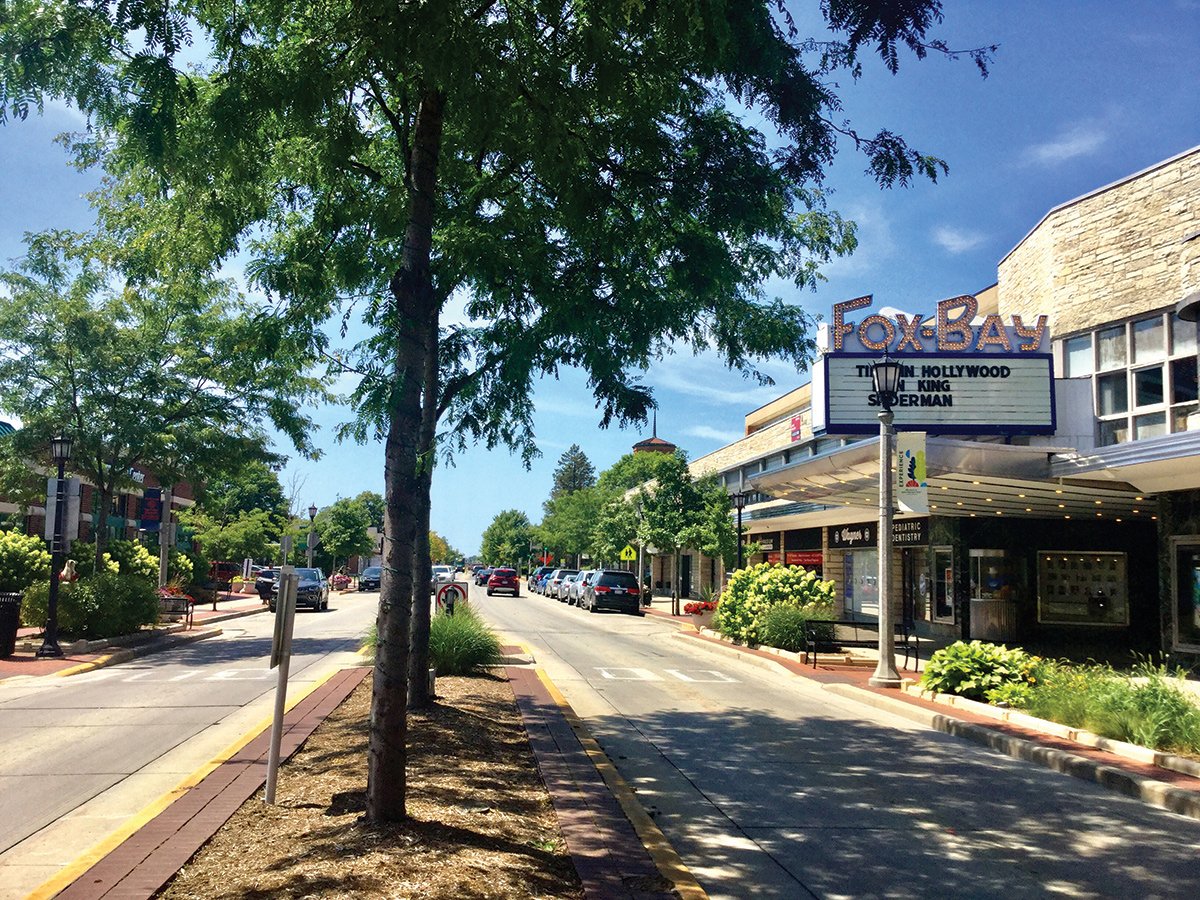
The main street is Silver Spring Drive. It is a real one , independent shops, cafes, restaurants, a farmers market on Saturdays in the summer, and a few institutions that have been on that block for close to a hundred years (Winkie's is a shop with a basement toy store, and Jack Pandl's is a restaurant that has served the neighborhood since 1915). It is the kind of downtown a lot of suburbs claim to have but do not.
The lakefront runs the whole eastern edge of the village. Big Bay Park and Klode Park both give you bluff-top green space and a staircase down to a beach. Between the two of them, you have summer covered.
The housing stock is dense, tree-lined, and mostly built in the first half of the last century. Streets are compact. Lots are not enormous. But the village has a physical scale that makes people feel at home in it fast.
Schools are the other big draw. Whitefish Bay High School has topped Wisconsin's public school rankings, and for a lot of families that is what makes the price point make sense.
Whitefish Bay is the north-shore neighborhood that runs on schools, family life, and the lake bluff. Buyers who look here usually have kids in mind, and the ones who do not are usually moving back home to Milwaukee and want to be near family.
Silver Spring Drive is the village core and it is more than a shopping street. It is a Saturday-morning ritual. Farmers market in the summer, a stroller crowd on the sidewalks, a set of businesses (Winkie's, Jack Pandl's) that have been on the block long enough to be landmarks. When people talk about the "small-town feel of Milwaukee suburbs," they are usually talking about this specific stretch.
Whitefish Bay listings I take usually sell to families with elementary-age kids. And the buyers who ask about Whitefish Bay ask me the same three questions in the first meeting: which streets are on which elementary boundary, how competitive will the search be, and how far can they push their budget without regretting it. The answers are: it matters more than they think, more than they expect, and about as far as their lender will let them.
Interactive. Zoom, pan, click a pin.
What Whitefish Bay costs right now
Zillow's home value index for Whitefish Bay sits at about $603,000 as of early 2026, up roughly 4 percent year over year. The village is one of the more consistent premium markets in Milwaukee County, and inventory moves fast when it hits.
Who tends to like Whitefish Bay
Not who "should" live here. Just what kind of daily life this place fits.
The honest tradeoffs
Whitefish Bay is expensive. That is not going to change. Inventory is limited, especially for anything under $600,000, and turnover in the most desirable streets is slow because people who buy here tend to stay.
The other honest note: it is a less diverse neighborhood than most of Milwaukee, both demographically and in the housing stock. If you want variety, character, or a range of price points on the same street, this may not be the fit. If you want a quiet, family-focused village that has worked hard to stay that way, it is one of the best in the metro.