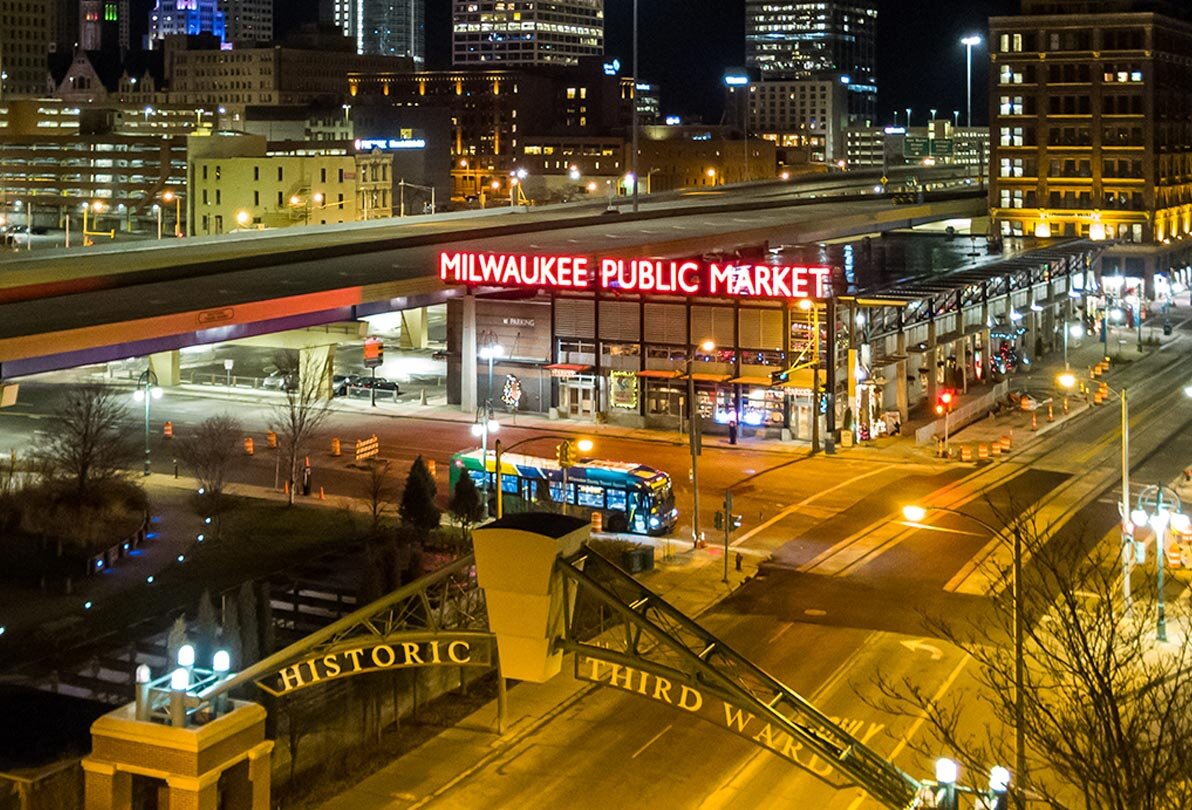
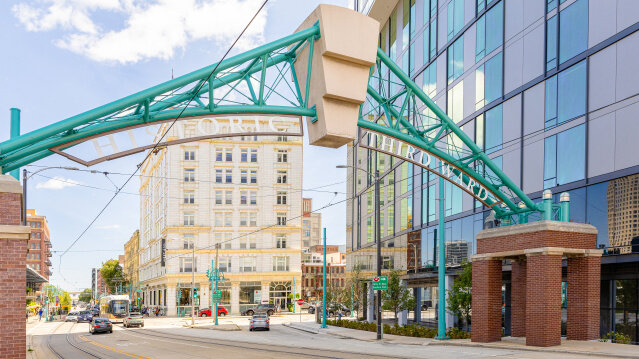
The Third Ward is Milwaukee at its most pedestrian. It sits on the south edge of the office core, between the river and the lake, and inside about a ten-block district you get a public market, a theater complex, an art school, a rooftop bar, half a dozen galleries, and the Riverwalk. You do not need a car to spend a Saturday here.
The whole neighborhood is a former warehouse district, and that is what still makes it feel like nowhere else in Milwaukee. The buildings are old brick and heavy timber. Streets are cobblestone in places. Most of what is inside them (lofts, restaurants, offices, galleries) was carved out of buildings that used to move grain, tobacco, and produce a hundred years ago.
The Milwaukee Public Market is the neighborhood's anchor and the closest thing to a public living room. Locals go for the vendors, tourists go because everyone told them to. Between the market, the Riverwalk, and the Kimpton rooftop bar, this is the part of Milwaukee people bring visitors to see first.
Housing here is almost entirely condos in converted warehouses and newer mid-rises. Yards do not really exist. Neither do driveways or single-family homes, mostly. What you get instead is a building with an elevator, a doorman on some of them, and the option to walk to almost every restaurant in the office core.
The Third Ward is Milwaukee's downtown warehouse district and it is the version of Milwaukee for buyers who want of Milwaukee. Cobblestone streets, converted warehouses turned into condos and lofts, the Public Market, restaurants and boutiques and galleries in old buildings that used to be something else. It is a small district that packs a lot of Milwaukee-lifestyle into a few blocks.
The buyers I bring to the Third Ward are usually office professionals who want to be steps from work, empty-nesters who sold a big suburban house and want a lock-and-leave lifestyle, or out-of-town buyers who want to be in the center of things when they visit Milwaukee. The setting sells itself. The dollars per square foot take some getting used to.
Third Ward buildings are not interchangeable. HOA fees, amenities, unit layouts, and light exposure vary widely across the district. Two condos at the same price in the same neighborhood can be very different homes. Tour more than one before you commit.
Interactive. Zoom, pan, click a pin.
What the Historic Third Ward costs right now
Redfin reports a Third Ward median sale price of about $642,500 as of November 2025, up nearly 30 percent year over year. That headline number sits on a small monthly sample (about 10 sales) because the neighborhood is inventory-thin and predominantly condos. Days on market ran around 55, and the price per square foot averaged about $254.
Who tends to like the Historic Third Ward
Not who "should" live here. Just what kind of daily life this place fits.
The honest tradeoffs
The Third Ward is a condo neighborhood. You are buying into an HOA with a monthly fee that covers real things (structure, amenities, sometimes utilities) and can climb quickly if a building has deferred maintenance. Read the HOA financials before you write an offer, not after.
Yards do not exist. Parking is usually a paid deeded spot or a monthly rental. Groceries mean the Public Market or a short drive. Summer weekends bring Festivals traffic and noise. None of that is a dealbreaker if you know what you are signing up for, but it is a very different daily rhythm than a Bay View bungalow.