
The East Side is Milwaukee's oldest neighborhood in the way that matters. It feels like a neighborhood. It runs from the central business district up to Shorewood, wedged between the Milwaukee River and Lake Michigan, and most of it you can navigate on foot.
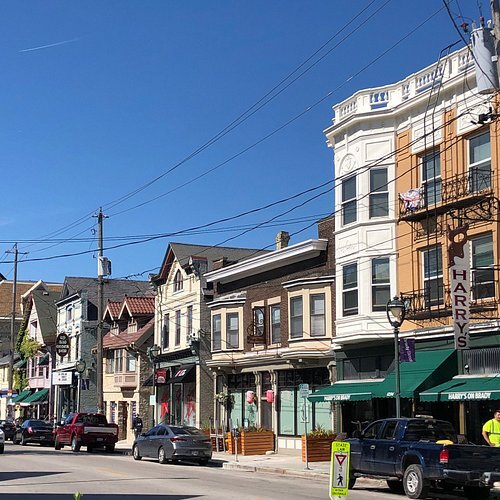
If you have never spent an evening on Brady Street, that is where to start. It is one of the handful of stretches in Milwaukee where independent restaurants, coffee shops, and bars sit shoulder to shoulder, and you can walk the whole thing in a night. North Avenue picks up the same energy a little further north.
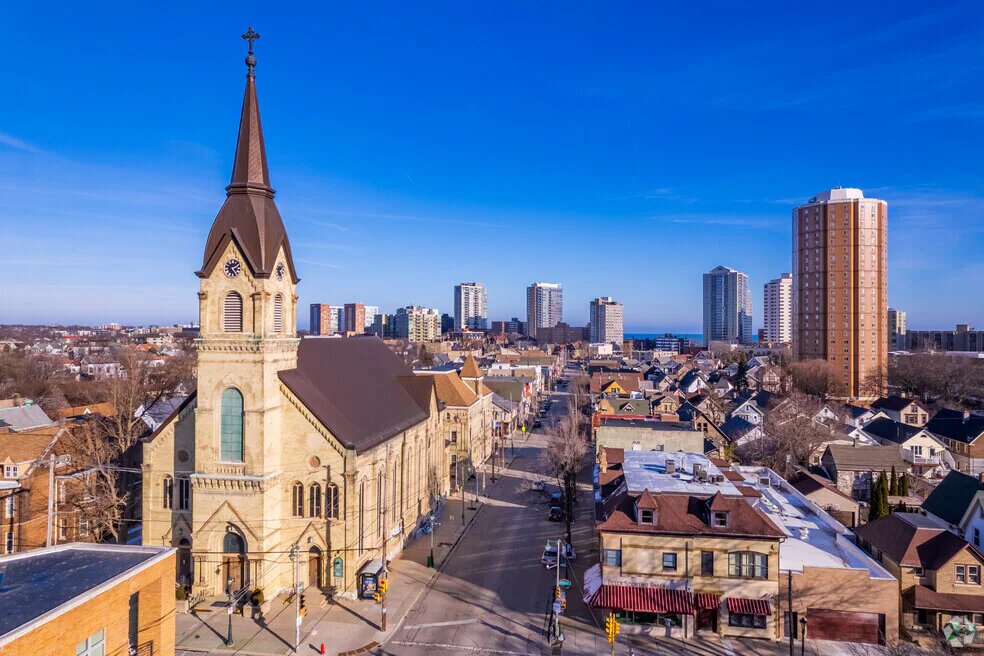
The lake side of the neighborhood is where the East Side really shows off. Bradford Beach anchors the summer. Lake Park sits on the bluff, designed by the same landscape architect who did Central Park. In between you get historic mansions along Lake Drive, a Victorian-era water tower that has stood there since the 1870s, and two art museums that sit inside old mansions of their own.
UWM sits centrally, which shapes daily foot traffic and business mix. Housing splits neatly. The Lower East Side runs denser and more apartment-heavy, so prices come in lower. The Upper East Side, closer to campus, is where single-family homes and pre-war character houses concentrate, so prices come in higher.
It is Milwaukee's original urban neighborhood, and it still is.
The East Side is where buyers land when they want to open their front door and step into a real city neighborhood. It runs along the Milwaukee River and Lake Michigan from the city center up to Shorewood, wraps around the UWM campus, and has the density of independent restaurants, bookstores, coffee shops, and bars that most of the metro cannot match.
My East Side clients tend to fall into two groups. Younger buyers who want an urban feel and are willing to trade square footage for it, and older buyers who sold a family home somewhere and want to live near a bookstore and the water. Both groups usually skip the driving-required suburbs on their first search.
The East Side is really several sub-neighborhoods with very different price points. The North Point streets closer to the lake and the mansion-belt off Newberry look nothing like the student-heavy blocks near UWM, and both look nothing like the newer builds on the river. Ask which East Side, not just the East Side.
Interactive. Zoom, pan, click a pin.
What Milwaukee's East Side costs right now
The East Side splits into two markets. Redfin reports a Lower East Side median sale price of about $255,500 as of November 2025, reflecting a denser mix of apartments and condos. The Upper East Side, with more single-family and historic homes, sits at about $507,425 for the same period. Which side of that gap you land on depends on where in the neighborhood you're looking, so start with a target block before you start with a target budget.
Who tends to like Milwaukee's East Side
Not who "should" live here. Just what kind of daily life this place fits.
The honest tradeoffs
Parking is a real thing. Especially anywhere near Brady Street, Downer, or Farwell after 5 pm, and especially on weekends. Most homes do not come with a garage, and the ones that do are usually detached and tight. If you want to park two cars off-street, plan on searching harder or paying more.
The lots are small. Houses are often built right up close to the property line, which is charming from the sidewalk but real when you want privacy or a back deck. Wide lots and big yards are the exception, not the norm.
And the houses are old. That is part of why people love the East Side, and it is also the honest part of what you are signing up for. Older homes here mean older foundations, older plumbing, and sometimes older electrical. Most of it is manageable if you know what you are getting into.